
Why moving beyond stored secrets with ToothPic is the only way to secure digital identity
This January, Data Privacy Week 2026 shines a much-needed spotlight on the most critical challenge of our digital era: the systemic failure of software-based trust, especially now that we are living in the “Age of Simulation”. As we navigate a landscape where 64% of users are deeply concerned about identity fraud, this week serves as a strategic moment to re-evaluate how we protect the data that defines our digital lives. It is an occasion to recognize that we have reached a critical inflection point, requiring a fundamental shift from vulnerable information to unclonable hardware identity.
Today, the “identity perimeter” is where the battle for data is fought; attackers no longer seek to “hack the bank,” but to “hijack the customer”. With AI able to crack 51% of common passwords in under a minute and deepfake fraud attempts surging by 3,000%, the importance of protecting data has never been more urgent.
Systemic Failures: Learning from Land Rover and Instagram Cases
The vulnerability of traditional data protection is best illustrated by recent cases that highlight the inherent flaws in “stored secrets” and legacy MFA.
- The Jaguar Land Rover Breach: recently, a cyberattack on Jaguar Land Rover resulted in the theft of employee payroll data. This case exposes a first-principles security flaw: anything stored as data can be stolen. When internal records—including salary details and bank information are exfiltrated, they serve as fuel for secondary social engineering attacks. This case proves that corporate “internal” data is now a primary target for identity hijacking, demonstrating that merely storing information behind a digital wall is no longer sufficient.
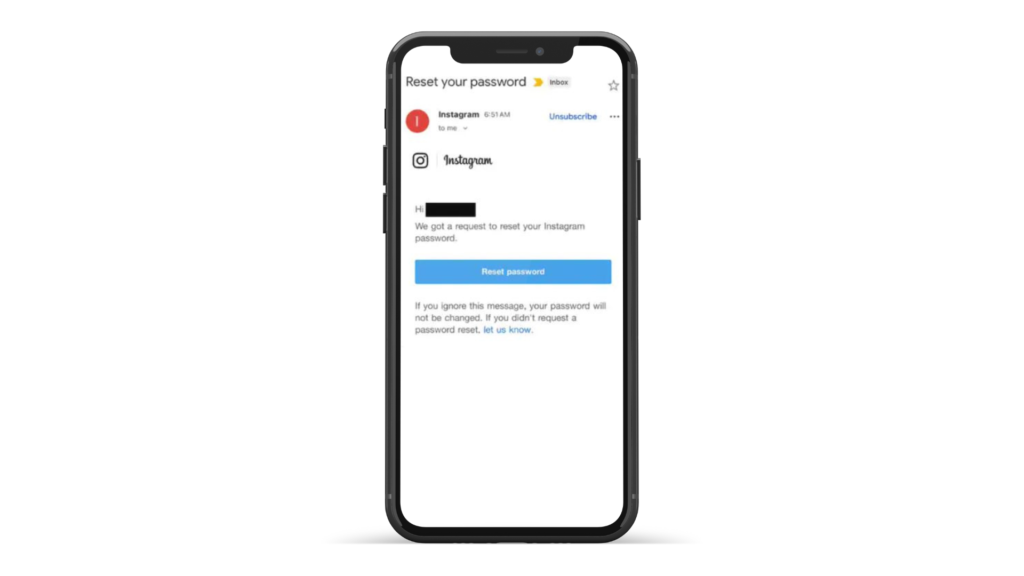
• The Instagram MFA Crisis: this is a primary example of the combined human and technical failures in modern digital trust. In January 2026, an “external party” exploited a bug to trigger legitimate password reset requests for millions, coinciding with a leak of 17 million scraped records containing 6.2 million email addresses. This incident occurred alongside the circulation of scraped user information on external forums, underscoring that any information stored as data is constantly at risk. A major hurdle remains the human element: 41% of users have historically refused to enable Multi-Factor Authentication (MFA) because of the friction it introduces into their daily experience. For those who do adopt extra security, the reliance on network-delivered codes is problematic, as these legacy methods are considered obsolete and are highly susceptible to interception. Additionally, even modern push notifications are being bypassed through “MFA fatigue” attacks, where intruders bombard users with repeated requests until they are worn down and accidentally approve unauthorized access.
ToothPic: The Physics of Unclonable Protection
To address these crises, ToothPic, recognized by Gartner as a Representative Vendor in the Gartner Market Guide for User Authentication, provides a solution that anchors trust in physical hardware rather than vulnerable code. ToothPic leverages a random byproduct of manufacturing found in every smartphone: Photo-Response Non-Uniformity (PRNU). Every camera sensor has microscopic imperfections in its pixels that convert photons to electrons in a slightly different, unique way. This pattern acts as a Physical Unclonable Function (PUF). ToothPic solution guarantees:
- Unclonable Identity: the PRNU pattern is random, persistent, and impossible to replicate, even by the manufacturer.
- No Stored Secrets: unlike traditional systems that store a key in memory (where it can be extracted by malware), ToothPic ephemerally reconstructs the private key only when needed. Once the authentication challenge is signed, the key is destroyed; it does not exist at rest.
- Malware and AI Resistance: because the identity is tied to the silicon of the sensor, a software clone of a phone will fail authentication because the underlying physical hardware is different. This results in a 99% reduction in Account Takeover (ATO) risks linked to malware and deepfakes.
Built for Privacy: The "Privacy by Design" Approach
A core pillar of ToothPic’s solution is its commitment to Privacy by Design, ensuring that robust data protection never compromises personal data. To extract the unique hardware fingerprint of a smartphone’s camera sensor, the ToothPic SDK automatically acquires several frames in a raw format to identify the hardware’s intrinsic characteristics. This process is designed to be frictionless and is largely invisible to the user, requiring only the standard system permission to access the camera.To uphold this ‘Privacy by Design’ framework, the technology operates according to core principles that safeguard user anonymity at every step:
- Eliminating visual content: ToothPic is strictly “not about the subject”. The technology focuses exclusively on Photo-Response Non-Uniformity (PRNU) microscopic manufacturing imperfections in the sensor silicon and automatically discards all visual content from the acquired frames. Because the algorithm focuses on sensor noise rather than imagery, no photos of the user or their surroundings are ever stored or transmitted.
- Ensuring anonymity and compliance: The technology is 100% privacy compliant (GDPR/CCPA) because it identifies the hardware, not the person. By providing a “possession factor” that is intrinsically tied to the physical device but specific to the individual application, ToothPic prevents invasive cross-app tracking and eliminates the need for privacy-invasive identifiers like IMEI or MAC addresses.
- Managing unclonable cryptographic keys:ToothPic utilizes an asymmetric cryptographic paradigm to ensure that credentials cannot be stolen or simulated. While the public key is deployed for server-side verification, the private key is never stored long-term on the device where it could be exposed to malware. Instead, the private key is ephemerally reconstructed on-demand using the unique PRNU pattern only when needed to sign a specific cryptographic challenge. Once the operation is complete, the key is immediately destroyed, making it virtually unclonable and providing a 99% reduction in risks associated with credential extraction.
Built for Privacy: The "Privacy by Design" Approach
Beyond its core security architecture, ToothPic provides significant operational and user experience benefits that surpass legacy authentication methods:
- Maximum Security & AI Resilience: By anchoring identity in physical hardware rather than software code, ToothPic provides a 99% reduction in Account Takeover (ATO) risks linked to malware and AI-driven deepfakes.
- Frictionless User Experience: The solution enables a seamless, passwordless login experience with an authentication latency of just 30ms. It requires no specific actions or gestures from the user, eliminating the “friction” that causes many to reject traditional MFA.
- Rapid Integration: Provided as an OS-agnostic SDK for iOS and Android, ToothPic allows companies to save almost 50% of engineering time typically spent maintaining and updating device identifiers.
- Lower Total Cost of Ownership (TCO): ToothPic turns ubiquitous smartphones into secure hardware tokens, eliminating the need for expensive dedicated hardware or the high operational costs and fraud losses associated with insecure SMS OTPs.
Securing a Trusted Future
As we observe Data Privacy Week 2026, the message is clear: incremental improvements to legacy software are no longer enough. To protect data effectively, we must move toward hardware-anchored trust. By leveraging the unique physics of the devices already in our pockets, ToothPic eliminates the “stored secret” vulnerability that led to the Land Rover and Instagram incidents, offering an unbreakable foundation for digital identity.
Take your data protection to the next level. ToothPic is the perfect solution for securing your digital identity.

